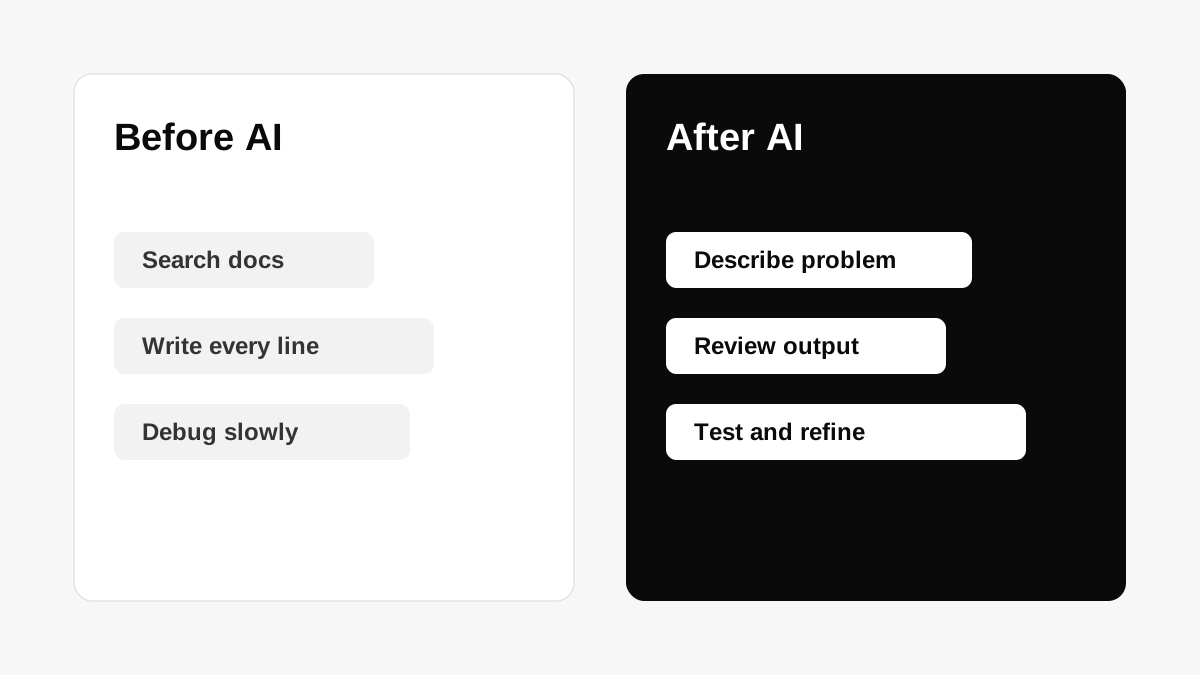
Just a few years ago, most of my work was writing code, reading documentation, searching for examples, and thinking through each step of a solution on my own. Some bugs took hours to diagnose. Some features required several approaches before the right implementation became clear.
Today, the way I work has changed completely. I often start by describing the problem to AI: what is wrong with the system, which part of the code might need to change, how the data flows, and what the expected result should be.
My role then becomes reading, reviewing, testing, and refining what AI produces. A task that once took hours, or sometimes days, can often be completed much faster.
The biggest change is not only speed. Some clients now send AI-generated code, installation notes, and deployment instructions. In that situation, my responsibility is not simply to write code. It is to verify whether the generated code is correct, secure, maintainable, and suitable for the system where it will run.
AI has not completely replaced developers, but it is changing the value a developer needs to provide. Writing code is still useful. Understanding the system, asking the right questions, recognizing risks, validating results, and making sound technical decisions are becoming even more important.