Weather Intelligence is not a new topic in logistics.
Weather risks along a route can already be analysed. Delays can be detected earlier, ETAs can be adjusted, and suitable windows for transport, loading, or unloading can be identified. The effect of weather on product demand is measurable as well.
The more interesting question is this: why does this information often reach the B2B customer only after the order has been placed?
The missing link between logistics and B2B commerce
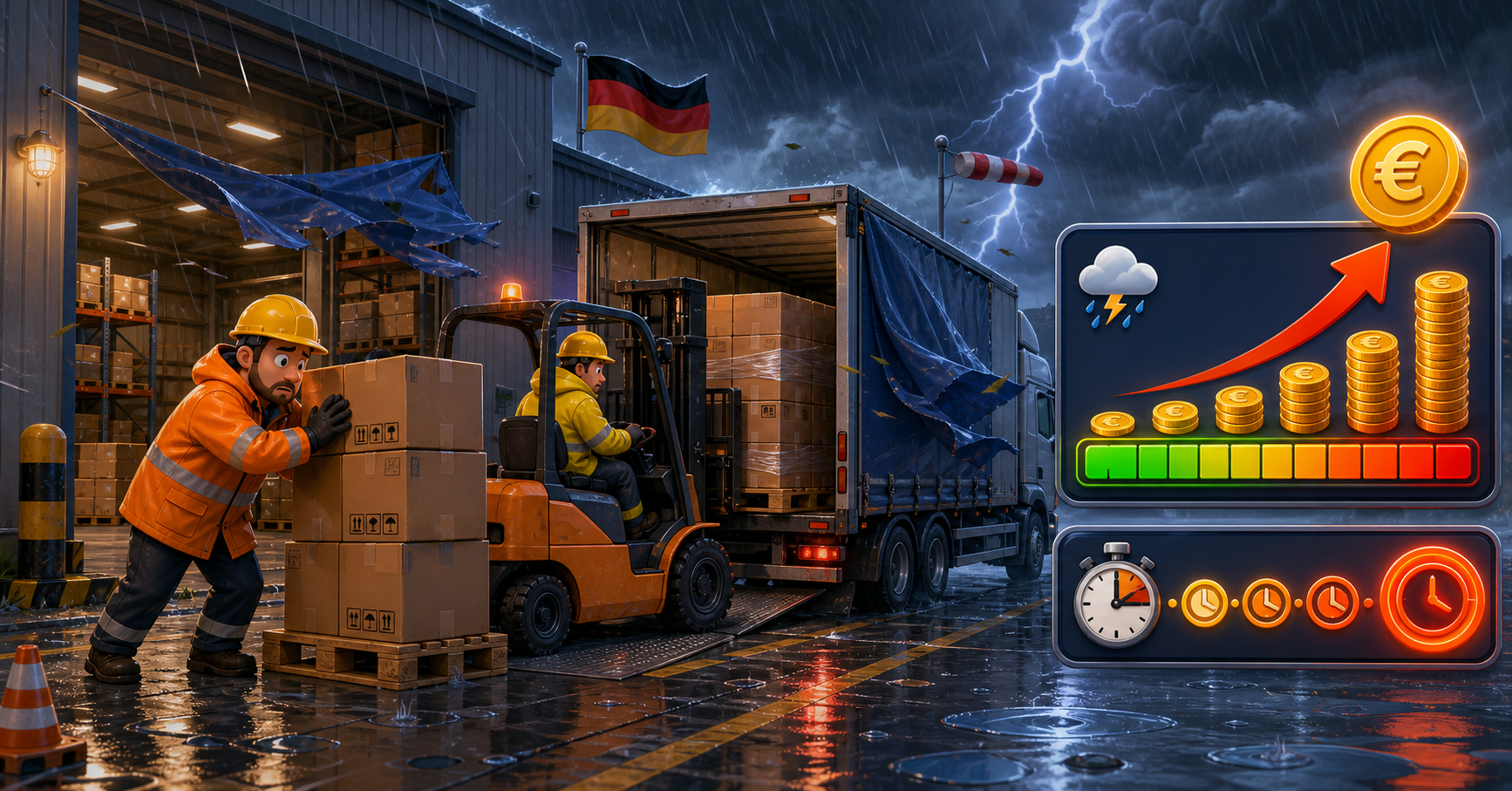
Many B2B shops still show a delivery time such as two to three working days regardless of whether heavy rain makes unloading difficult, heat requires special packaging, or a storm threatens the planned route.
Instead of a single static promise, a weather-aware B2B shop could offer concrete options before checkout:
- Delivery on Monday despite increased weather risk, using a suitable vehicle and showing the additional cost transparently.
- Delivery on Tuesday within a favourable weather window and without a surcharge.
- Delivery on Wednesday as the lowest-cost and most reliable option.
This would turn a static delivery estimate into a realistic delivery promise.
What the shop would need to connect
- Weather at the warehouse and delivery location.
- Risks along the transport route.
- Product, packaging, loading, and unloading requirements.
- Available vehicles, staff, and operational capacity.
- Historical delivery data.
- Individual agreements with the B2B customer.
The result should not be a weather widget. It should be a decision layer that combines commerce, logistics, ERP data, and external weather information.
Value beyond logistics
The commercial opportunity goes further than delivery planning. If weather-related demand can be recognised early, the shop could recommend relevant products at the right time, such as waterproofing materials before a rainy period or cooling products before a heatwave.
The potential benefits are practical:
- More accurate delivery dates.
- More transparent transport costs.
- Fewer unplanned delays.
- More relevant product recommendations.
- Additional revenue at the right time.
- Greater customer trust.
A pragmatic first version
I would not begin with a fully automated pricing system. A sensible first version would provide delivery-risk warnings, suggest suitable delivery windows, and require manual approval for weather-related additional costs.
Once enough operational and historical data is available, ETAs, cost calculations, and product recommendations could be automated step by step.
The technology for Weather Intelligence already exists. The real opportunity is to connect it with the B2B ordering process, so customers can make better decisions before they confirm an order.
For Shopware, this would be a particularly interesting integration challenge involving the storefront, Rule Builder, shipping calculations, ERP or logistics systems, customer-specific agreements, and external data providers.
Discuss a weather-aware B2B commerce concept
Sources and examples
Tomorrow.io Route Events API: weather events and risks along a route
NRF WeatherIQ: weather-driven demand intelligence
Supply Chain Analytics: machine learning and weather effects on retail sales
#B2BCommerce #Shopware #DigitalCommerce #WeatherIntelligence #Logistics #SupplyChain #DeliveryExperience #B2BInnovation